1 on 1 Online Tutoring vs. Coaching Centers: Why High Scorers Are Switching
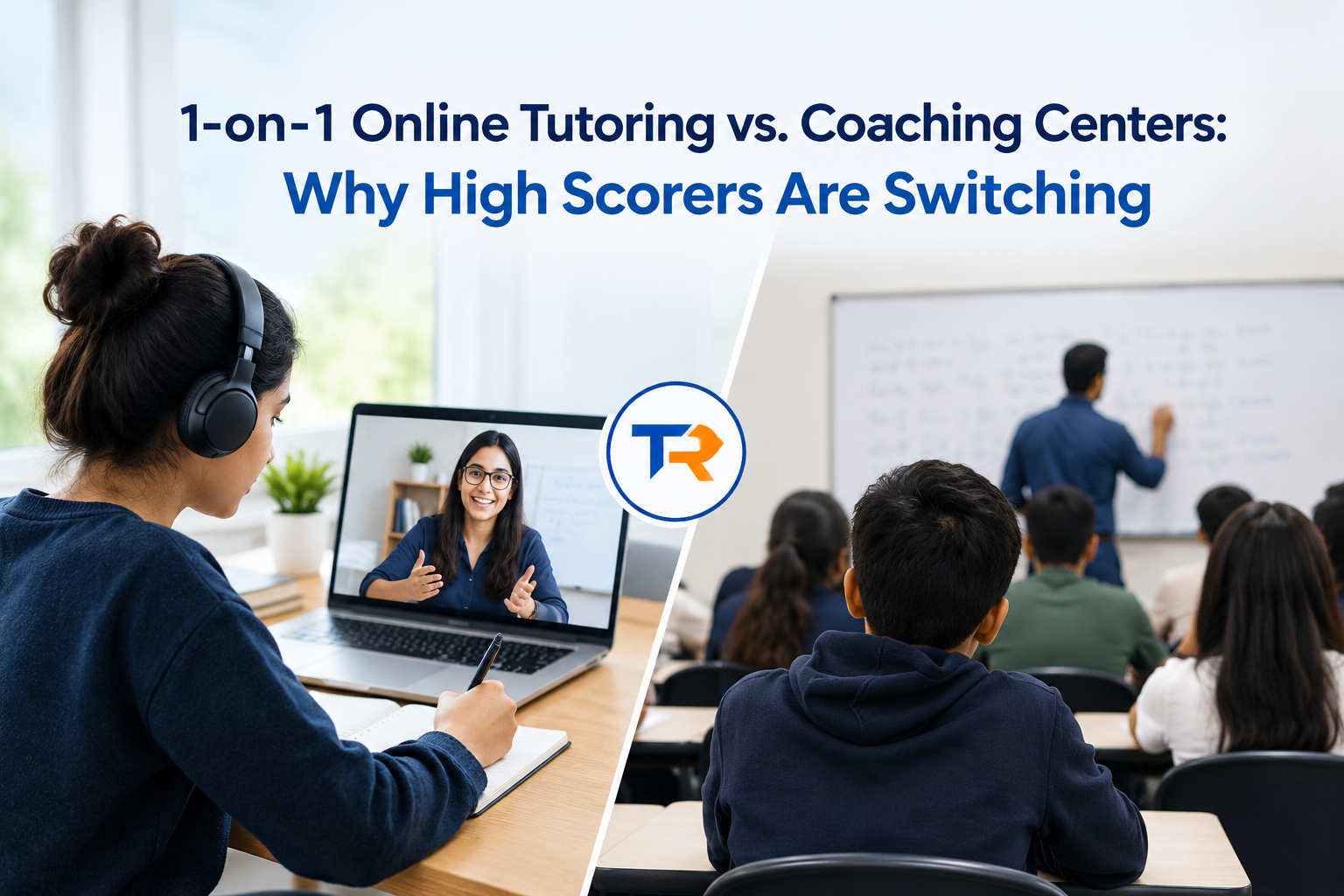
1-on-1 Online Tutoring vs. Coaching Centers: Why High Scorers Are Switching
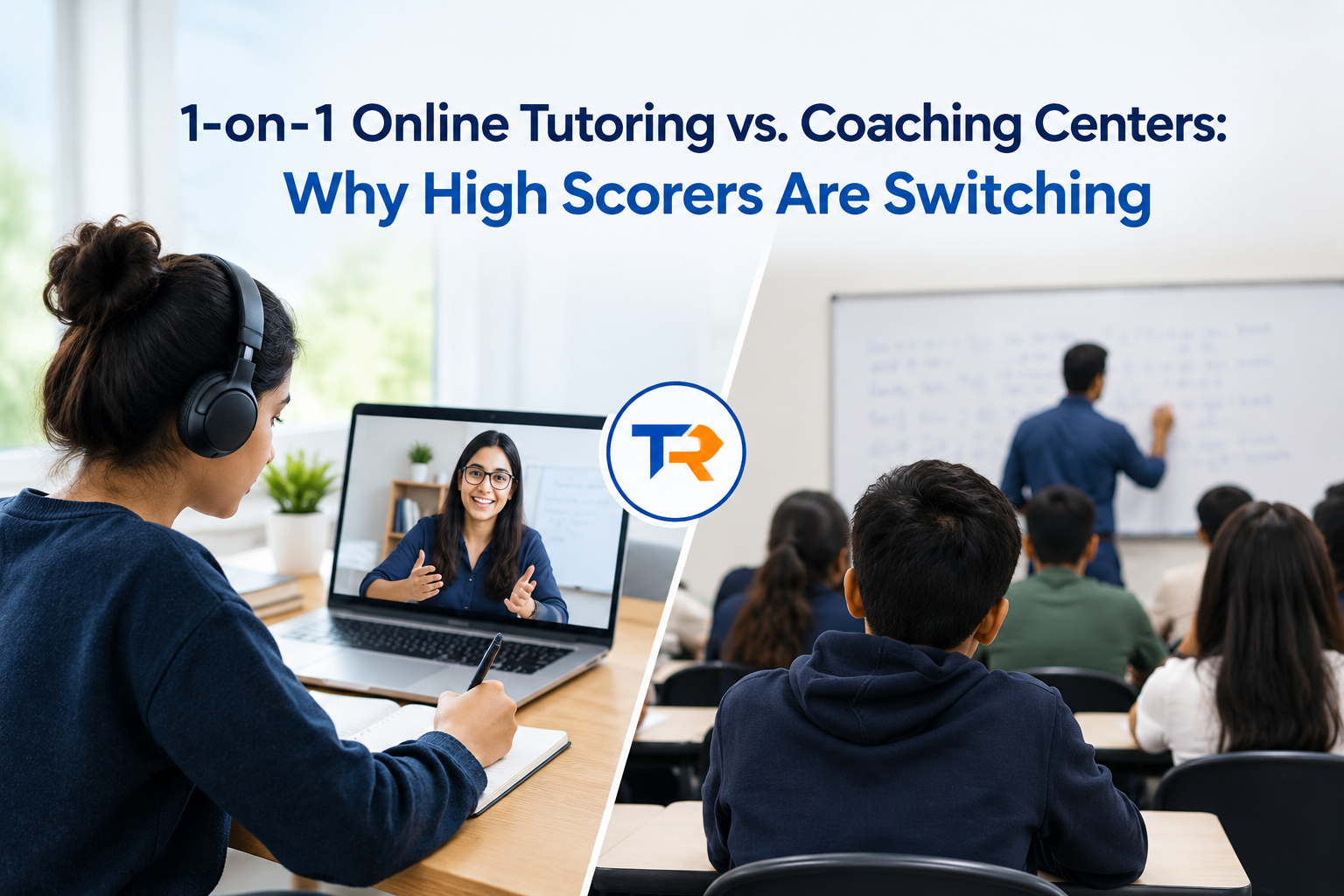
For years, coaching centers have been the standard choice for students preparing for competitive exams and aiming for top scores. A teacher teaches a batch, the batch follows the same schedule, and everyone works through the same syllabus. But that model does not work the same way for every student.
Some students do well in a classroom environment. Others need more time on difficult topics, more practice in specific areas, or a learning pace that is different from the rest of the batch. This is where 1-on-1 online tutoring has become another option worth considering.
But is 1-on-1 online tutoring actually better than a coaching center? Not necessarily. The right choice depends on what the student needs, how they learn, the level of preparation required, and how much individual attention they need.
This blog compares 1-on-1 online tutoring and coaching centers across teaching approach, individual attention, doubt resolution, learning pace, flexibility, assessment, exam preparation, and overall learning experience. The goal is not to declare one model the winner, but to help students and parents understand the differences and make a more informed decision about which approach suits them.
What Is the Difference Between 1-on-1 Online Tutoring and Coaching Centers?
1-on-1 online tutoring is built around the individual student, while coaching centers are designed around a group of students following a common plan. This affects everything from teaching pace and doubt resolution to the way lessons, practice, and progress are handled.
Neither approach works the same way for every student. Understanding how each one works makes it easier to see which setup matches a student’s learning style, academic goals, and preparation needs.
1-on-1 Online Tutoring vs. Coaching Centers: Key Differences
The difference between the two models goes beyond studying online versus sitting in a classroom. The real distinction lies in how much of the learning process is built around the individual student. A coaching center has to balance the needs of an entire batch, while 1-on-1 tutoring can adjust the teaching process around one student.
That difference becomes more important as students move into demanding preparation, where their existing knowledge, weak areas, learning pace, and exam requirements may not match those of the rest of the class. Let us take a look at these differences:
Personalised Teaching vs. One-Size-Fits-All Classes
In a coaching center, the teacher generally has to keep the entire batch moving through the syllabus. The lesson plan, pace, and sequence are decided in advance, and students are expected to keep up with that structure. This can work well for students who are comfortable with the pace and approach of the class.
With 1-on-1 tutoring, each student can start from a different point. A tutor can first understand what the student already knows, where they are struggling, and which areas require more attention. The tutor can then adjust the teaching accordingly.
For example, two students preparing for the same exam may be at very different levels in mathematics. One may need help with fundamentals, while another may be ready for advanced problem-solving. In a batch, both students generally follow the same lesson. In a 1-on-1 setting, their preparation can take different directions.
This may matter more to students who have uneven subject knowledge, significant learning gaps, or need a pace different from a standard classroom schedule.
Individual Feedback vs. General Classroom Feedback
Feedback is another area where the two models differ considerably. In a coaching class, a teacher may explain a common mistake made by several students or discuss answers after a test. This gives the batch useful feedback, but it may not always explain why one particular student keeps making the same mistake.
In 1-on-1 tutoring, feedback can be tied directly to the student's work. A tutor can identify patterns in their mistakes, understand whether the problem comes from a conceptual gap, calculation error, question interpretation, or exam strategy, and adjust future practice accordingly.
This makes feedback more than simply knowing whether an answer is right or wrong. It can help the student understand what needs to change in their approach.
This may matter more to students who understand the syllabus but continue losing marks because of recurring mistakes, weak application, or inconsistent performance.

Flexible Scheduling vs. Fixed Coaching Batches
Coaching centers usually operate around fixed batch timings. Students need to fit their schedules around the class, and missing a session can mean catching up with the material later.
1-on-1 online tutoring generally offers more flexibility because the session involves only the student and tutor. Timing can often be arranged around school, extracurricular activities, exams, or other commitments.
There is another difference that is easy to overlook: flexibility in learning time does not necessarily mean less structure. A student can still follow a planned study schedule while having the ability to adjust sessions when their academic workload changes.
For students following international curricula or studying across different time zones, this flexibility can also be particularly relevant.
This may matter more to students with demanding school schedules, extracurricular commitments, international curricula, or parents looking for tutoring that can fit around an existing routine.
Targeted Practice vs. Standardised Study Material
Coaching centers typically provide a common set of study materials, worksheets, homework, mock tests, and practice questions for the batch. This creates a structured preparation system and ensures that students have a defined set of resources to work through.
1-on-1 tutoring allows practice to be more selective. Instead of assigning the same number and type of questions to every student, the tutor can identify the areas that need more work and use practice accordingly.
For instance, a student who consistently performs well on basic questions but struggles with application-based problems may need a different practice mix from a student who is still building foundational understanding.
The important consideration is therefore not simply how much material a student receives, but whether the material is helping them work on the areas that actually need improvement.
This may matter more to students who already have substantial study material but need help deciding what to practise, or students whose strengths and weaknesses are very different from the average student in their batch.
Individual Progress Tracking vs. Batch-Based Assessment
Coaching centers commonly use regular tests and assessments to measure student performance. These can be useful for understanding marks, accuracy, rankings, and performance against other students in the batch.
With 1-on-1 tutoring, progress can be looked at more individually. Instead of focusing only on the score from the latest test, the tutor can track changes in specific areas over time—such as conceptual understanding, question-solving ability, accuracy, speed, and recurring errors.
This creates a different kind of conversation around performance. A student may have the same overall score in two tests but make fewer conceptual mistakes and more time-management errors in the second one. That distinction can help determine what they should work on next.
This may matter more to students who need closer monitoring, have specific academic weaknesses to address, or want their preparation to change based on their performance rather than simply following the next stage of a fixed course.
Pace of Learning vs. Pace of the Syllabus
One of the most important differences is often the simplest: who decides when it is time to move on? In a coaching center, the syllabus determines much of the pace. Once a topic is completed, the batch generally moves to the next one, even though some students may still need additional practice.
In 1-on-1 online tutoring, the tutor can spend another session on a difficult topic, revisit an earlier concept, or move ahead when the student is ready. The pace can therefore respond to the student's progress rather than being determined entirely by the batch calendar.
This does not automatically make one approach more effective. Some students perform well with a fixed schedule and an external pace pushing them forward. Others may need more control over how quickly they move through different topics.
This may matter more to students who either fall behind the pace of a classroom or feel that a fixed syllabus moves too slowly in areas they already understand.
Depth of Doubt Resolution vs. Doubt-solving Within a Batch
A student asking a doubt in a coaching center is still one student among many. Teachers may answer questions during class, through dedicated doubt sessions, or through other support systems the institute provides.
In a 1-on-1 online tutoring session, the student's questions become part of the lesson itself. If a doubt reveals that the student has misunderstood an underlying concept, the tutor can go back, address that gap, and then return to the original problem.
This can be particularly useful when a student's difficulty is not limited to one question but reflects a broader misunderstanding.
This may matter more to students who have frequent doubts, struggle to ask questions in a large classroom, or need explanations beyond the standard solution.

Peer Learning vs. Individual Learning
Coaching centers offer a group learning environment that 1-on-1 online tutoring does not provide. Students can see how their peers approach questions, discuss problems, experience healthy academic competition, and compare their performance through tests and rankings. For some students, this environment can create useful motivation and a sense of routine.
1-on-1 tutoring removes most of that group dynamic and replaces it with a more focused student-tutor interaction. The student gets dedicated attention, but there is less exposure to how other students are approaching the same problems.
In this scenario, the coaching environment is more useful to students who enjoy learning with peers and competition, as opposed to students who concentrate better in an individual learning environment.
Structure and Scale vs. Individual Attention
Coaching centers are designed to provide a complete preparation structure to a large number of students. They can bring together scheduled classes, study material, regular tests, doubt support, and a defined syllabus under one system.
1-on-1 tutoring works differently. Its strength is the ability to build the learning process around one student, but the overall experience can depend more heavily on the tutor, the quality of the study plan, and how consistently progress is monitored.
So the decision is not simply “coaching center or 1-on-1 online tutoring?” It is about understanding what the student needs from the learning environment.
A student who benefits from a fixed structure, peer environment, and common preparation system may prefer a coaching setup. A student who needs personalised pacing, focused feedback, targeted practice, and individual attention may find 1-on-1 online tutoring more aligned with their needs. In some cases, students may also use both, coaching for structured preparation and 1-on-1 online tutoring for specific subjects, difficult topics, or additional support.
1-on-1 Online Tutoring vs. Coaching Centers: Which One Is Right for Your Student?
When 1-on-1 Online Tutoring May Be a Better Fit
1-on-1 tutoring may suit students who need a more personalised learning approach. It can be useful when a student:
- Needs extra attention in specific subjects or topics
- Learns faster or slower than the usual classroom pace
- Needs regular individual feedback on mistakes and progress
- Has a busy or flexible schedule
- Is preparing for a specific exam, curriculum, or academic goal
When a Coaching Center May Work Better
A coaching center may suit students who perform well in a structured, group-based environment. It can be a good fit when a student:
- Is comfortable following a fixed timetable and syllabus
- Enjoys learning alongside other students
- Responds well to competition and regular testing
- Prefers having a standardised study plan and material
- Can keep up with the pace of the batch
Conclusion
For many students, the question is no longer about choosing the most popular way to study, but finding what actually works for them. Coaching centers can provide structure and competition, while 1-on-1 tutoring gives students room to learn at their own pace and focus on what they need. Neither approach works the same way for everyone. What matters is choosing the kind of support that fits the student, their goals, and the way they learn best.
Why Choose Top Rank Tutors to Hire Tutors Online for Study Preparation?
Top Rank Tutors is a personalised online tutoring platform that connects students with experienced subject experts for 1-on-1 and small-batch classes across international and Indian curricula. Our expert tutors help students understand where they stand and build the preparation around their goals, pace, and learning gaps. The platform provides:
- Personalised learning plans based on the student's level, goals, and areas that need improvement.
- Curriculum-specific tutoring for CBSE, ICSE, JEE, NEET, IGCSE, IB, A Level, AP, SAT, ACT, and other programmes.
- Regular assessments and performance tracking to identify progress and areas that still need work.
- Study material and practice support, including worksheets, notes, assignments, mock tests, and previous-year papers.
- Parent progress updates with regular feedback and discussions.
- Flexible online classes across different time zones, along with doubt support between classes.
Students can also attend a free demo class, which includes an assessment, live teaching, and a personalized learning roadmap before they decide to continue.

Frequently Asked Questions About 1-on-1 Online Tutoring
How do I choose the right online tutor for my child?
Hire an online tutor who has strong subject knowledge, relevant teaching experience, and experience with the student’s curriculum or exam. It is also important to consider how well they explain concepts, identify learning gaps, and adapt their teaching to the student. A trial session can help you judge whether the tutor is a good academic and communication fit.
What should I look for in a 1-on-1 online tutor?
Along with required subject expertise, look for someone who can explain difficult concepts clearly, understand where a student is struggling, and change their approach when needed. Their experience with the relevant exam, curriculum, and level of the student should also be considered.
How are 1-on-1 online tutoring sessions conducted?
Sessions are usually conducted live through an online video platform like Google Meet, Zoom, etc., with the tutor and student working together in real time. Depending on the subject, the tutor may use a digital whiteboard, screen sharing, presentations, questions, and practice exercises. The exact format can be adapted to the student's subject and learning needs.
How long should a 1-on-1 online tutoring session be?
There is no fixed duration that works for every student. Around 45–60 minutes may work well for younger students or focused lessons, while older students preparing for demanding exams may benefit from longer sessions. The duration should be long enough to cover the planned work without making the student lose focus.
How often should students have 1-on-1 online tutoring sessions?
The frequency depends on the student's goals, current level, and how much support they need. One or two sessions a week may be enough for ongoing support, while students preparing for important exams may need more frequent sessions. The schedule can also be adjusted during periods of heavier revision or before exams.
Can online tutoring help students who are already performing well?
Yes, students who are already doing well may use tutoring to go beyond their current level rather than simply address weaknesses. Sessions can focus on advanced problems, stronger exam strategies, challenging concepts, or preparation for competitive exams and Olympiads.
Can 1-on-1 online tutoring help students prepare for multiple exams?
Yes, provided the tutor has relevant expertise and the preparation is planned properly. A tutor can help organise preparation across different exams by identifying overlapping topics and then addressing the areas that require separate preparation. The plan should account for each exam's syllabus, format, difficulty, and timeline.
Can students change their learning plan as their academic goals change?
Yes, and this is one of the practical advantages of an individual tutoring setup. If a student changes their target exam, moves to a different curriculum, or needs more focus on a particular subject, the study plan can be revised accordingly. The tutor can also adjust the pace and priorities based on the student's progress.
How much does 1-on-1 online tutoring cost?
Basic price starts from $8 per session, but the cost varies depending on the number of sessions you are taking in a month or week. Specialist preparation for competitive exams or advanced subjects may cost more than general academic support. It is better to compare what is included in the tutoring arrangement rather than looking at the hourly price alone.
Can students follow international curricula with an online tutor?
Yes, students can work with online tutors for curricula such as IGCSE, A-Levels, IB, and other international programmes, provided the tutor has experience with the specific curriculum. The tutor should understand its syllabus, assessment pattern, question style, and academic requirements rather than simply teaching the subject in a general way.
Start your learning journey today
Book a free demo class or explore our courses and pricing.